
Insight9 min read
Artificial intelligence is evolving towards systems capable of understanding objectives, interacting with business applications and carrying out tasks autonomously. This evolution paves the way for what we will call ‘agent-based enterprises’. But before deploying AI agents on a large scale, organisations must prepare their processes, data, information systems, security and governance. Discover the seven essential prerequisites for becoming an ‘Agentic-Ready’ organisation by 2027.
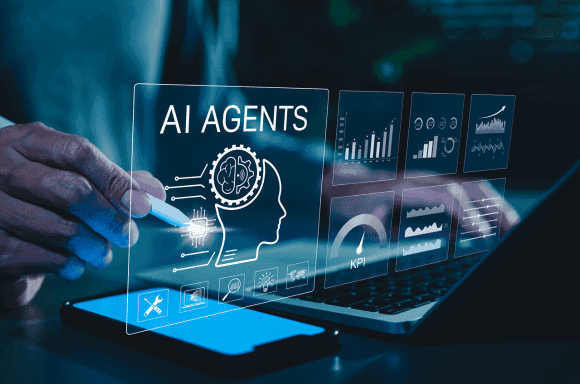
The Agentic Enterprise: A New Stage in Digital Transformation
Artificial intelligence is undergoing a major evolution. Following the emergence of conversational assistants and content-generation tools, a new generation of systems is gradually making its way into organisations: AI Agents.
Unlike traditional assistants, which primarily respond to user requests, AI Agents can pursue objectives, analyse situations, leverage multiple tools, interact with business applications and execute a sequence of actions within a defined framework.
This development marks a significant transition: AI is no longer limited to assisting employees with their tasks. It is beginning to play a direct role in business operations and workflows.
Research published by leading industry players, including OpenAI, Anthropic, Google and Microsoft, reflects this shift towards systems capable of handling increasingly complex workflows.
Anthropic's 2026 State of AI Agents Report highlights the accelerating adoption of AI Agents. According to the study, 80% of surveyed organisations report measurable economic impact from their investments in AI Agents, while 57% already use them in multi-step workflows.
However, this progress also reveals several challenges:
- Integrating AI Agents into existing information systems.
- Ensuring data availability and quality.
- Managing development and deployment costs.
- Controlling access rights and automated actions.
- Ensuring reliable results and effective human oversight.
The key takeaway is clear: the success of agentic AI depends as much on organisational maturity as it does on technological performance.
For companies looking to take this next step in 2027, the question is no longer simply which AI Agents to deploy, but whether their organisation is ready to adopt them.
Here are seven key prerequisites to consider.
1. Master business processes before automating them
An AI Agent cannot automatically fix a poorly designed process.
Before launching any agentic AI initiative, an organisation must have a clear understanding of the activities it intends to transform.
This involves identifying:
- The events that trigger a process.
- The different processing stages.
- The decisions that need to be made.
- The required data.
- The applications and systems involved.
- Exceptions and specific situations.
- Essential human interventions.
- Expected outcomes.
This mapping exercise helps distinguish processes that can be automated from those requiring human intervention or prior reorganisation.
Not every process requires an AI Agent. Traditional automation may be more appropriate when a task follows fixed and predictable rules.
AI Agents are particularly valuable when processes involve contextual decisions, unstructured information, multiple tools or situations requiring a degree of adaptability.
The business challenge is to identify high-value processes and determine precisely where AI can deliver tangible benefits.
2. Define measurable business value
The number of AI Agents deployed is not a performance indicator.
An organisation can multiply its experiments without achieving any significant improvement in operational results.
Every initiative must therefore be linked to a specific and measurable business objective.
For example:
- Reduce customer request processing times.
- Lower administrative processing costs.
- Improve the quality of responses provided to users.
- Reduce errors in repetitive operations.
- Accelerate case processing.
- Improve service availability.
- Increase team productivity.
The first step is to establish a baseline before deployment.
Results must then be measured and compared against the defined objectives.
An agentic AI project should be able to demonstrate its contribution to the organisation's performance.
The business challenge is to move from technology-driven experimentation to a model focused on economic and operational value creation.
3. Structure and govern your data
Data is the foundation of any high-performing artificial intelligence architecture.
An AI Agent connected to an ERP, CRM, document management platform or database can only deliver reliable results if the information it accesses is relevant, consistent and sufficiently up to date.
Poor data quality can lead to reasoning errors, inappropriate recommendations or incorrect operational decisions.
Before deploying AI Agents, several questions need to be addressed:
- What are the authoritative data sources?
- Where is strategic information stored?
- Who is responsible for data quality?
- How is data updated?
- Which information is confidential or sensitive?
- Which data can AI Agents access and use?
- How can data traceability and integrity be ensured?
Data governance must also address classification, retention, confidentiality and access control.
For African organisations, this issue takes on an additional dimension: control over infrastructure, strategic data and data location directly contributes to digital sovereignty.
The business challenge is to build a reliable, structured and secure information asset capable of sustainably supporting artificial intelligence systems.
4. Prepare your information system for AI Agents
One of the main differences between a conversational assistant and an AI Agent lies in its ability to interact with an organisation's digital environment.
Depending on the permissions granted, an Agent can access a file in a document management system, retrieve information from an ERP, query a CRM, prepare a document or trigger an operation through an API.
This ability to interact requires a sufficiently structured and interoperable information system.
Organisations should assess the following:
- API availability and documentation.
- Integration between business applications.
- Data centralisation and accessibility.
- Identity and access management.
- Service and infrastructure availability.
- Interaction logging.
- Monitoring mechanisms for system exchanges.
This preparation applies to both existing systems and newly developed applications.
An information system historically designed for human users must progressively accommodate interactions between applications, automated services and AI Agents.
The objective is not to immediately replace existing infrastructure, but to make it progressively capable of supporting these new use cases.
The business challenge: build an interoperable, scalable and sufficiently secure digital architecture that allows AI Agents to interact with business applications.
5. Define the autonomy level of AI Agents
Giving an AI Agent access to an information system does not mean granting it unrestricted authority to perform every operation.
Its level of autonomy must be determined according to the nature of its tasks, their criticality and the potential consequences of an error.
A progressive approach can be adopted:
- Level 1 – Consultation: the Agent accesses authorised information and presents it.
- Level 2 – Assistance: it analyses data and provides recommendations.
- Level 3 – Preparation: it prepares documents, responses or operations without executing them.
- Level 4 – Supervised execution: it performs an action after approval from an authorised employee.
- Level 5 – Controlled autonomy: it automatically performs certain operations within a predefined scope.
These levels must be adapted to each business process.
For example, an Agent responsible for classifying documents may be granted a relatively high level of autonomy. By contrast, an Agent involved in payments, human resources or sensitive data management must be subject to much stricter controls.
Mechanisms must also be in place to stop operations, restrict actions and return control to human supervision.
The business challenge: find the right balance between operational autonomy, risk management and human accountability.
6. Integrate cybersecurity and governance by design
Agentic AI significantly expands the attack surface of information systems.
An Agent with access to a CRM, document management system or ERP becomes a new technical actor capable of interacting with strategic resources.
This evolution introduces specific risks:
- Unauthorised access to data.
- Execution of unintended actions.
- Exposure of confidential information.
- Manipulation of Agents through malicious instructions (prompt injection).
- Misuse of connected tools.
- Propagation of errors across multiple systems.
- Difficulties in attributing executed actions.
Security therefore cannot be added after deployment. It must be built into the agentic architecture from the design stage.
Several principles should be applied:
- A dedicated identity for each Agent: every Agent should have an identifiable technical identity, distinct from human user identities.
- Least privilege: access must be restricted to the resources strictly necessary for its assigned mission.
- Traceability: every query, decision and action must be recorded and auditable.
- Separation of responsibilities: sensitive operations must be subject to appropriate approval processes.
- Monitoring: unusual behaviour and unauthorised access attempts must be detectable.
- Reversibility: permissions must be capable of being suspended or revoked quickly.
Approaches developed around Agent identity, including those introduced by Google Cloud, illustrate the growing importance of this dimension in modern architectures.
Cybersecurity must also cover hosting infrastructure, the models being used, external APIs and data flows exchanged with AI providers.
The business challenge: make security, governance and traceability fundamental components of the organisation's artificial intelligence architecture.
7. Establish continuous evaluation and human oversight
An AI Agent that performs well during testing does not necessarily guarantee reliable performance in production.
Models evolve, data changes, applications are updated and business processes are transformed.
It is therefore essential to establish a continuous evaluation framework.
Anthropic's work on evaluations for AI agents highlights the importance of measuring Agents' actual capabilities and verifying the stability of their performance over time.
Two dimensions are particularly important:
- Capability Evals: these assess whether an Agent can successfully complete its assigned tasks under normal conditions and in complex situations.
- Regression Evals: these help detect performance degradation following changes to the model, instructions, tools or data.
Test scenarios should include:
- Routine requests.
- Missing or contradictory information.
- Sensitive requests.
- Manipulation attempts.
- Situations outside the authorised scope.
- Application access errors.
- Cases requiring human intervention.
Finally, human oversight must be built into the design from the outset.
An Agent must be able to recognise its limitations, stop an operation when the required conditions are not met and transfer the task to a qualified employee.
The business challenge: ensure the long-term reliability of AI Agents while maintaining human control, correction and decision-making capabilities.
Is a multi-agent architecture always necessary?
The evolution of agentic AI is accompanied by growing interest in multi-agent architectures, in which several specialised Agents collaborate to achieve a common objective.
This approach can be relevant when processes require multiple areas of expertise, distinct responsibilities or complex interactions.
However, deploying more Agents does not automatically guarantee better performance.
A multi-agent architecture can also increase:
- Technical complexity.
- Operating costs.
- Monitoring difficulties.
- Risks associated with interactions between Agents.
- Traceability and governance requirements.
A progressive approach remains preferable:
- Identify a priority business process.
- Deploy an initial Agent with a clearly defined scope.
- Connect it to the necessary tools.
- Measure its performance.
- Gradually expand its capabilities.
- Introduce multiple Agents only when the complexity of the process justifies it.
The objective is not to build the most complex architecture, but the one that best meets the organisation's needs.
Agentic Enterprise 2027: Is Your Organisation Really Ready?
Before making significant investments in agentic AI, organisations can assess their level of readiness through seven fundamental questions.
| Dimension | Strategic question |
|---|---|
| Processes | Are our business processes sufficiently documented and controlled? |
| Business value | Do we know exactly which performance indicators we want to improve? |
| Data | Is our data reliable, accessible and governed? |
| Information system | Can our applications interact securely with AI Agents? |
| Autonomy | Have we defined which actions an Agent can access, prepare or execute? |
| Governance & Security | Are identities, access rights, responsibilities and actions properly controlled? |
| Evaluation | Do we have mechanisms to measure Agent reliability and involve human intervention when necessary? |
These seven dimensions provide an initial framework for assessing an organisation's maturity in relation to agentic AI.
An organisation does not need to achieve full maturity across every dimension before getting started. However, it must understand its limitations, identify its priorities and establish a coherent transformation roadmap.
Conclusion: The Agentic Enterprise Begins Before AI Agents Are Deployed
The Agentic Enterprise of 2027 will not necessarily be the organisation that has deployed the largest number of AI Agents.
It will, above all, be the organisation that has successfully prepared its organisational and technological environment to make sustainable use of their capabilities.
Process quality, data management, information system interoperability, cybersecurity, governance and evaluation are the true foundations of this transformation.
Agentic AI should not be approached as a simple evolution of digital tools. It represents a deeper transformation in how organisations structure their operations, mobilise their resources and make decisions.
At African Wealths Development (AWD), we believe this evolution should be part of a structured digital transformation strategy combining information systems integration, data value creation, intelligent automation and cybersecurity.
Our conviction is simple: before entrusting artificial intelligence with greater responsibilities, organisations must first gain control over the environments in which it will operate.
Preparing your organisation for agentic AI today means building the foundations of tomorrow's digital competitiveness.
References and Further Reading
To explore the technical and organisational challenges of agentic AI:
- Anthropic – The 2026 State of AI Agents Report
- Anthropic – Demystifying Evals for AI Agents
- OpenAI – A Practical Guide to Building AI Agents
- Google Cloud – Agent Identity Overview
African Wealths Development (AWD)
Building bridges between data, security and people.
Clarify the opening definition of AI AgentsAdd an executive summary for decision-makers
Insight
Agent-based Enterprise 2027: the 7 prerequisites for preparing your organisation for the AI of tomorrow
Insight
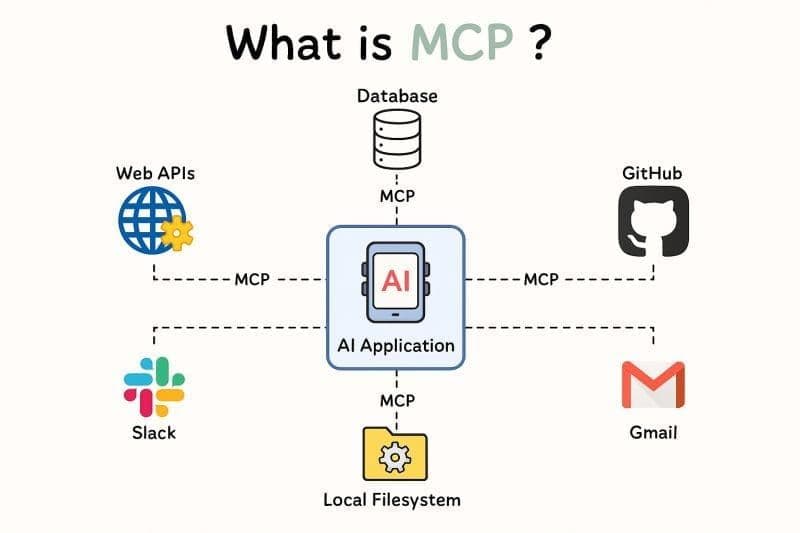
MCP: the new backbone of AI, transforming digital transformation and the value of your data
Insight
After Transformers, the next AI revolution is taking shape: World Models
Insight
Claude, ChatGPT and AI in Mali: trust, confidentiality and digital sovereignty